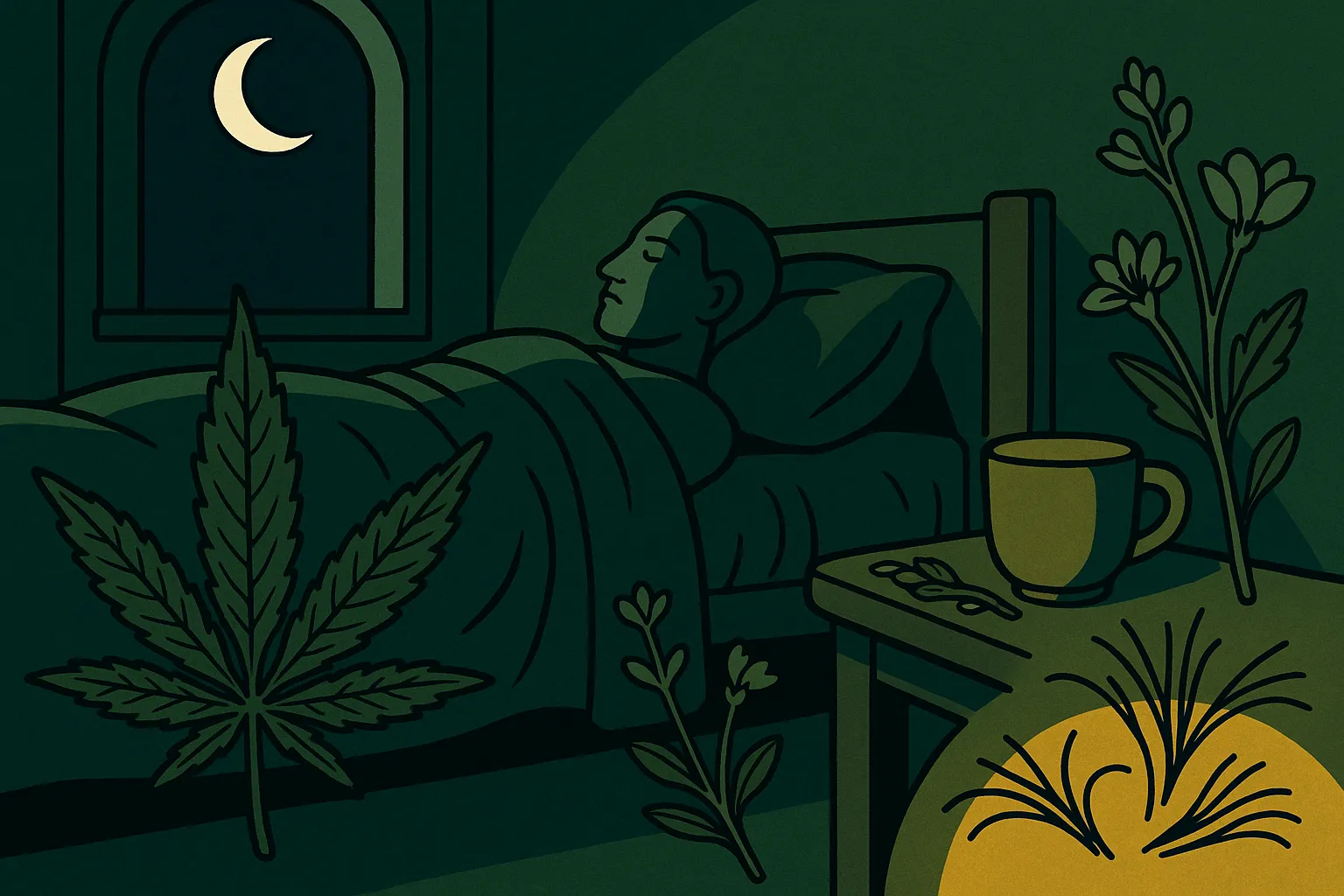
Sleep hygiene habits that may work alongside Vijaya: an Ayurvedic perspective
Ayurveda pairs consistent sleep and wake times, a calm evening routine, and warm herbal support with Vijaya to traditionally support restful sleep. Habits like oil massage, limiting screen light, and eating an early dinner may help the body settle into deeper, more restorative rest.
Rest the Ayurvedic way: sleep hygiene habits that may work with Vijaya
Most of us know poor sleep drains us. Fewer of us know that Ayurveda mapped the causes and remedies thousands of years ago. Ancient texts like the Charaka Samhita place Nidra, restful sleep, among the three pillars that sustain human health.
When sleep slips, Ayurveda looks first at which dosha is out of balance, then at the daily habits that may help restore it.
This article walks you through that dosha lens, explains the Ayurvedic body clock and why the hours before 10 pm matter, and lays out eight practical sleep hygiene habits drawn from classical Dinacharya.
It also explores how Vijaya, the classical Ayurvedic name for cannabis, has traditionally been used alongside these habits to support a calmer, more restful night.
Why sleep hygiene matters in Ayurveda
Ancient Ayurvedic texts name three pillars that sustain human health: Ahara (nourishment), Brahmacharya (the disciplined use of vital energy), and Nidra (sleep). Of the three, Nidra is described as the one that restores the body and mind after every day of living.
The Charaka Samhita, one of Ayurveda's foundational texts, describes proper sleep as bringing happiness, nourishment, strength, and a long life. Poor sleep, by contrast, is said to bring misery, weakness, and the slow erosion of vitality.
What makes Ayurveda's view of sleep distinct from a purely modern reading is its emphasis on timing and regularity, not just total hours. A person who sleeps eight hours at irregular times, or who goes to bed long after midnight, is not considered well-rested in the Ayurvedic framework.
The quality of rest depends on when you sleep, what you did in the hours before, and whether your daily rhythm is consistent enough for the body to trust.
Sleep hygiene, as a concept, maps onto this tradition closely. The term refers to the set of habits and environmental conditions that support consistent, restorative sleep.
In India, where irregular schedules, late-night screen use, and spicy evening meals are common, building a deliberate bedtime routine should make a real difference to how rested a person feels.
This article draws on Ayurvedic principles to explain why certain evening habits support sleep, which botanicals the tradition has long valued for rest, and how a newer AYUSH-licensed ingredient, Vijaya (the classical Ayurvedic name for cannabis), fits into that picture.
Every habit here is framed as traditionally used support, not as a cure or a guaranteed outcome. Where a specific health concern is involved, a qualified physician should guide the approach.
How Ayurveda reads a restless night: the dosha lens
Ayurveda organizes the forces that govern the body into three functional principles called doshas: Vata, Pitta, and Kapha. Each dosha has qualities that influence physiology and, when out of balance, create recognizable patterns of disturbance. Sleep problems are no exception.
Understanding which dosha pattern fits your experience should help you choose the right habits and botanicals.
Vata, composed of air and space, governs movement and the nervous system. When Vata is aggravated, the mind races at bedtime. Thoughts arrive in quick succession and refuse to settle.
A person with excess Vata may fall asleep easily but wake from around 2 am onward, which falls in the Vata-dominant portion of the night, and find it difficult to return to sleep. The body may feel restless, and dreams tend to be vivid or anxious.
Pitta, composed of fire and water, governs transformation, digestion, and intensity. Excess Pitta at night often shows up as difficulty falling asleep because the mind is still processing, analyzing, or problem-solving. A Pitta-aggravated person may feel too warm, wake with frustration or anger, or have intense, conflict-driven dreams.
The Pitta window of the night runs roughly from 10 pm to 2 am, which is why working late or arguing before bed tends to worsen this pattern.
Kapha, composed of earth and water, governs stability and structure. Kapha imbalance rarely causes insomnia in the classic sense. Instead, it produces heavy, prolonged sleep that still leaves a person feeling dull and unrefreshed in the morning. Oversleeping, difficulty waking, and a foggy head are the signals.
Kapha types may benefit less from sedating herbs and more from a consistent, earlier wake time and stimulating morning practices.
Most people carry a combination of these patterns, and they shift with seasons, stress, and age. If you recognize your pattern here, you should weight the habits in the sections below accordingly.
If you are uncertain or dealing with a persistent sleep concern, book a free consultation with a Calmosis physician who can read your constitution properly.
The Ayurvedic body clock and the best time to sleep in India
Ayurveda describes the day and night as moving through repeating cycles of Kapha, Pitta, and Vata, each roughly four hours long. The evening Kapha cycle runs from approximately 6 pm to 10 pm. During this window, the qualities of Kapha, heaviness, slowness, and groundedness, naturally rise in the body.
This is the body's biological invitation to wind down.
If a person falls asleep before 10 pm, or at least begins winding down well before then, they ride this Kapha wave into rest. The transition into sleep feels natural and relatively effortless. After 10 pm, the Pitta cycle begins.
Pitta's fiery, activating quality produces a second wind, the familiar experience of feeling suddenly alert and hungry late at night. Once a person crosses into the Pitta window, falling asleep becomes harder, digestion becomes more active, and the mind tends to engage rather than release.
For most Indian adults, a target bedtime of 10 pm to 10:30 pm aligns with this traditional framework and also maps onto what circadian biology (the internal 24-hour clock that regulates sleep and waking) describes as the ideal window for melatonin to rise and body temperature to fall.
The specific timing matters more in cities like Mumbai, Bengaluru, or Delhi, where late-night social and work culture routinely pushes bedtimes past midnight.
Ayurveda also emphasizes a consistent wake time, ideally in the pre-sunrise hours, roughly 4:30 am to 5:30 am depending on the season and your city. This period is called Brahma Muhurta, when the mind is naturally clear and light.
A consistent wake time anchors the entire daily rhythm, which in turn makes falling asleep at the right hour easier over time. Dinacharya (the Ayurvedic concept of a structured daily routine) treats the wake time as the anchor point, not the bedtime, because the whole day's rhythm flows from when it begins.
Eight sleep hygiene habits rooted in Ayurvedic tradition
The following habits come directly from Ayurvedic Dinacharya and classical texts. Each one has a specific rationale within the tradition. They are presented as practices that may support restful sleep, not as treatments for any condition.
- Abhyanga before bathing: Abhyanga (self-massage with warm oil) is one of Ayurveda's most recommended daily practices. Applied to the scalp, feet, and body with sesame oil in cooler months or coconut oil in warmer ones, it is traditionally said to calm Vata, ground the nervous system, and signal the body that the day's activity is ending. Even a five-minute foot massage with warm oil before bed may support a sense of settling.
- Eat a light dinner before 7:30 pm: Ayurveda places the main meal at midday, when digestive fire is strongest. The evening meal should be light and easy to digest, ideally finished at least two to three hours before sleep. A heavy dinner close to bedtime is said to burden Agni (digestive fire) and generate heat and restlessness through the night.
- Warm milk as Anupana: Anupana (the vehicle or carrier that follows a herbal preparation) has a long history in Ayurveda. Warm milk, taken after the evening meal or before bed, is traditionally valued for its grounding, Vata-calming effect. You should take it plain or with a pinch of ashwagandha or nutmeg. This practice also serves as the classical carrier for Ayurvedic sleep-support formulations.
- Pranayama or breath work: Slow, regulated breathing practices such as Nadi Shodhana (alternate nostril breathing) or Bhramari (humming breath) are traditionally used to quiet the mind and balance the nervous system before sleep. Even five minutes of slow nasal breathing should shift the body toward a calmer state.
- Screen limits from 9 pm: Ayurveda describes the eyes as the seat of Pitta. Stimulating the eyes with bright screens late in the evening aggravates Pitta and disturbs the natural winding-down process. Setting a firm screen limit at 9 pm, or using warm-toned lighting in the final hour, supports the transition into the Kapha window.
- A cool, dark, and quiet bedroom: The bedroom in Ayurvedic tradition is a space for rest and intimacy only. Clutter, work materials, and noise are considered Vata-aggravating. A clean, slightly cool room with minimal light supports the body's natural temperature drop at sleep onset.
- Consistent sleep and wake times: Regularity is the foundation of Dinacharya. The body's internal rhythms stabilize when sleep and wake times are consistent, even on weekends. Ayurveda treats irregular schedules as one of the primary causes of Vata aggravation and poor sleep quality.
- A brief journaling or gratitude practice: Writing down three things that went well, or noting unfinished tasks for the next day, is a modern habit with a clear Ayurvedic parallel. It externalizes the mental activity that would otherwise continue as racing thoughts at bedtime, helping to settle the Vata mind before the lights go out.
Ayurvedic botanicals traditionally used to support restful sleep
Ayurveda holds a wide pharmacopoeia of plants that practitioners have used for centuries to support calm and rest. The following botanicals appear in classical texts and in many contemporary AYUSH-licensed formulations. Each is framed here as traditionally valued to support, not as a cure or guaranteed treatment.
- Ashwagandha (Withania somnifera): One of Ayurveda's most studied adaptogens, ashwagandha is traditionally valued to support the body's response to stress and to promote stamina and a balanced nervous system. Classical texts describe it as Balya (strengthening) and Rasayana (rejuvenating). Practitioners often recommend taking it with warm milk at night.
- Brahmi (Bacopa monnieri): Brahmi is traditionally used to support memory, concentration, and a calm mind. It is considered a Medhya Rasayana, a class of herbs valued for their effect on the intellect and nervous system. Its calming quality makes it traditionally relevant for the racing, Vata-type mind that resists sleep.
- Shankhpushpi (Convolvulus pluricaulis, though the species used varies by manufacturer): Shankhpushpi is specifically named in classical texts for its role in supporting restful sleep and a soothed mind. It is considered one of the primary Medhya herbs and is traditionally used to quiet mental agitation before bed.
- Saffron (Crocus sativus): Saffron has been used in Ayurvedic and Unani traditions for centuries to support emotional balance and a positive outlook. Classical formulations often include it in warm milk preparations taken at night. It is traditionally valued for its effect on the mind's emotional tone.
- Jatamansi (Nardostachys jatamansi): Jatamansi is a classical Ayurvedic nervine, traditionally used to support a calm nervous system and restful sleep. It is considered cooling and grounding, making it particularly relevant for Pitta-type sleep disturbances.
- Nutmeg (Myristica fragrans): A small pinch of nutmeg in warm milk is one of Ayurveda's simplest and most traditional sleep-support preparations. It is considered warming and grounding and is traditionally used to support deep, uninterrupted sleep.
These botanicals work best as part of a broader routine and, where possible, under the guidance of a practitioner who can match the herb to your constitution. If you have a specific health concern or take prescribed medication, book a free consultation before adding new herbs to your routine.
Where Vijaya fits in the Ayurvedic sleep tradition
Vijaya is the classical Ayurvedic name for cannabis. It appears in texts including the Sarngadhara Samhita and the Raj Nighantu, where it is classified as a plant with Nidrajanana (sleep-inducing) and Vedanasthapana (pain-relieving) properties.
Classical Ayurvedic practitioners used Vijaya in carefully prepared, purified forms through a process called Shodhana, which removes harsh qualities and makes the plant suitable for therapeutic use.
In the dosha framework, Vijaya is traditionally understood to calm excess Vata. Because Vata governs the nervous system and mental activity, a Vata-calming herb is directly relevant to the racing mind and broken sleep that many people experience.
The tradition also describes Vijaya as supporting a sense of ease and groundedness, qualities that align with what many users report when they use full-spectrum Vijaya preparations.
Full-spectrum Vijaya preparations retain a range of naturally occurring plant compounds working together. This differs from preparations that isolate a single compound. The full-spectrum approach is consistent with Ayurveda's broader philosophy that a plant's complete profile, rather than one extracted component, is what the tradition has historically worked with.
Calmosis Holistic Gummy brings this classical ingredient into a contemporary, AYUSH-licensed form. Each 5g gummy contains 250mg of purified, full-spectrum Vijaya at 5%, prepared through the traditional Shodhana process.
It combines this with nine other Ayurvedic botanicals, including ashwagandha, brahmi, shankhpushpi, and saffron, each traditionally valued to support calm, clarity, and restful sleep. You take the gummy after a meal, followed by warm milk, which is the classical Anupana. Calm typically unfolds gently over 45 to 90 minutes.
Calmosis Holistic Gummy is positioned as traditionally used support for calm and rest, not as a treatment for insomnia or any other condition. It is available under AYUSH licensing and is intended for use under a physician's guidance.
For current pricing and to learn whether it suits your constitution, visit the Calmosis Holistic Gummy product page or book a free consultation with a Calmosis physician.
Comparing common Ayurvedic sleep support approaches (data table section)
The table below compares key Ayurvedic sleep support approaches across several practical dimensions. It is a reference guide, not a prescription. The right combination for any individual depends on their constitution, lifestyle, and any existing health concerns.
| Approach | Ayurvedic tradition | Primary dosha addressed | Typical form | How it fits a nightly routine | Guidance needed? |
|---|---|---|---|---|---|
| Abhyanga (oil self-massage) | Dinacharya; described in Ashtanga Hridayam | Vata | Warm sesame or coconut oil applied to feet, scalp, and body | 30 to 60 minutes before bed, before bathing | No; suitable for self-practice |
| Ashwagandha | Rasayana herb; Charaka Samhita | Vata, Kapha | Powder or capsule with warm milk | After the evening meal or 30 minutes before bed | Preferred; dosage varies by constitution |
| Brahmi | Medhya Rasayana; Charaka Samhita | Vata, Pitta | Powder, capsule, or oil (scalp application) | Oral: with evening milk; oil: during Abhyanga | Preferred; may interact with some medications |
| Shankhpushpi | Medhya herb; Ashtanga Hridayam | Vata, Pitta | Syrup, powder, or tablet | 30 minutes before bed with warm water or milk | Preferred; especially if taking prescribed medicines |
| Saffron in warm milk | Classical Anupana preparation; Bhavaprakasha | Pitta, Vata | A few strands steeped in warm milk | As a pre-bed ritual, 20 to 30 minutes before sleep | No; suitable for most adults in culinary amounts |
| Pranayama (breath work) | Yoga-Ayurveda tradition; Hatha Yoga Pradipika | Vata, Pitta | Nadi Shodhana or Bhramari practice | 5 to 10 minutes as part of the wind-down sequence | No; suitable for self-practice |
| Vijaya (purified, full-spectrum) | Sarngadhara Samhita; Raj Nighantu; Shodhana process | Vata | AYUSH-licensed gummy or oil, e.g., Calmosis Holistic Gummy | After a meal, followed by warm milk as Anupana; 45 to 90 minutes before intended sleep | Yes; physician guidance recommended; AYUSH-licensed |
| Consistent sleep schedule (Dinacharya) | Core principle of Dinacharya; Charaka Samhita | All three doshas | Behavioral habit; no supplement required | Fixed bedtime and wake time, including weekends | No; foundational for everyone |
Frequently asked questions about Sleep hygiene habits that may work alongside Vijaya: an Ayurvedic perspective
What is the best time to sleep according to Ayurveda in India?
Ayurveda recommends sleeping before 10 pm, when Kapha energy traditionally supports heaviness and ease of rest. Staying awake past that window invites a Pitta-driven second wind that can make falling asleep harder. Aligning with this body clock is a core Ayurvedic sleep hygiene principle.
How does Ayurveda explain a restless night using the dosha lens?
Ayurveda links restless nights most often to aggravated Vata dosha, which traditionally governs movement and the nervous system. An overactive mind, light sleep, and waking between 2 am and 6 am are classic Vata signs. Pitta imbalance may show as waking hot and mentally alert.
Which Ayurvedic botanicals are traditionally used to support restful sleep?
Ashwagandha, shankhpushpi, brahmi, and shatavari are among the botanicals Ayurveda has traditionally valued for calming the mind and supporting restful sleep. Each is used to support a balanced stress response or a soothed nervous system, not as a guaranteed cure for any sleep condition.
Where does Vijaya fit in the Ayurvedic sleep tradition?
Vijaya, the classical Ayurvedic name for cannabis, has traditionally been used in Ayurvedic texts to support calm and ease of rest. It is positioned as one element within a broader sleep routine, not a standalone solution, and is best used under the guidance of a qualified physician.
Is Vijaya legal and safe to use for sleep support in India?
Vijaya-based formulations that are AYUSH-licensed and prescribed by a registered practitioner are legally available in India. Safety and suitability depend on your individual health picture. Book a free doctor consultation with Calmosis to get personalised guidance before starting any Vijaya-based wellness routine.
What evening habits does Ayurveda say to avoid for better sleep?
Ayurveda traditionally advises against heavy meals after sunset, stimulating screen light in the hour before bed, vigorous exercise late in the evening, and mentally activating work close to bedtime. These habits are said to aggravate Vata and Pitta, making it harder for the body to settle.
Can Ayurvedic sleep habits help with a diagnosed sleep disorder?
Ayurvedic habits may support everyday rest and a calmer evening routine, but they are not a substitute for medical care. If you have a diagnosed sleep condition, please speak with a doctor. You can book a free Calmosis doctor consultation to discuss whether Ayurvedic support is appropriate for you.
What is Anupana and how does it relate to taking Vijaya for sleep?
Anupana is the classical Ayurvedic practice of pairing a formulation with a specific carrier to improve absorption and effect. Warm milk is the traditional Anupana for Vijaya-based preparations at night, as it is said to support the calming action and help the body receive the botanicals more readily.
How long does it take for Ayurvedic sleep support to show results?
Ayurveda works gradually and results vary by individual constitution, lifestyle, and consistency. Traditional guidance encourages a start-low, go-slow approach over several weeks rather than expecting overnight change. A qualified physician can help you set realistic expectations based on your personal health picture.
Habits to avoid in the evening according to Ayurveda
Ayurveda is as specific about what to stop doing as it is about what to start. The following behaviors are described in classical texts as dosha-aggravating in the evening hours. Reducing or removing them should make a meaningful difference to sleep quality, even before adding any botanical support.
- Late, heavy meals: A large meal eaten after 8 pm forces the digestive system to work through the night. Ayurveda describes this as smothering Agni at the wrong time, generating Ama (undigested metabolic residue) and internal heat that disturbs rest. Spicy, fried, or fermented foods are particularly aggravatingShop Sleep Mantra
Sources & further reading
