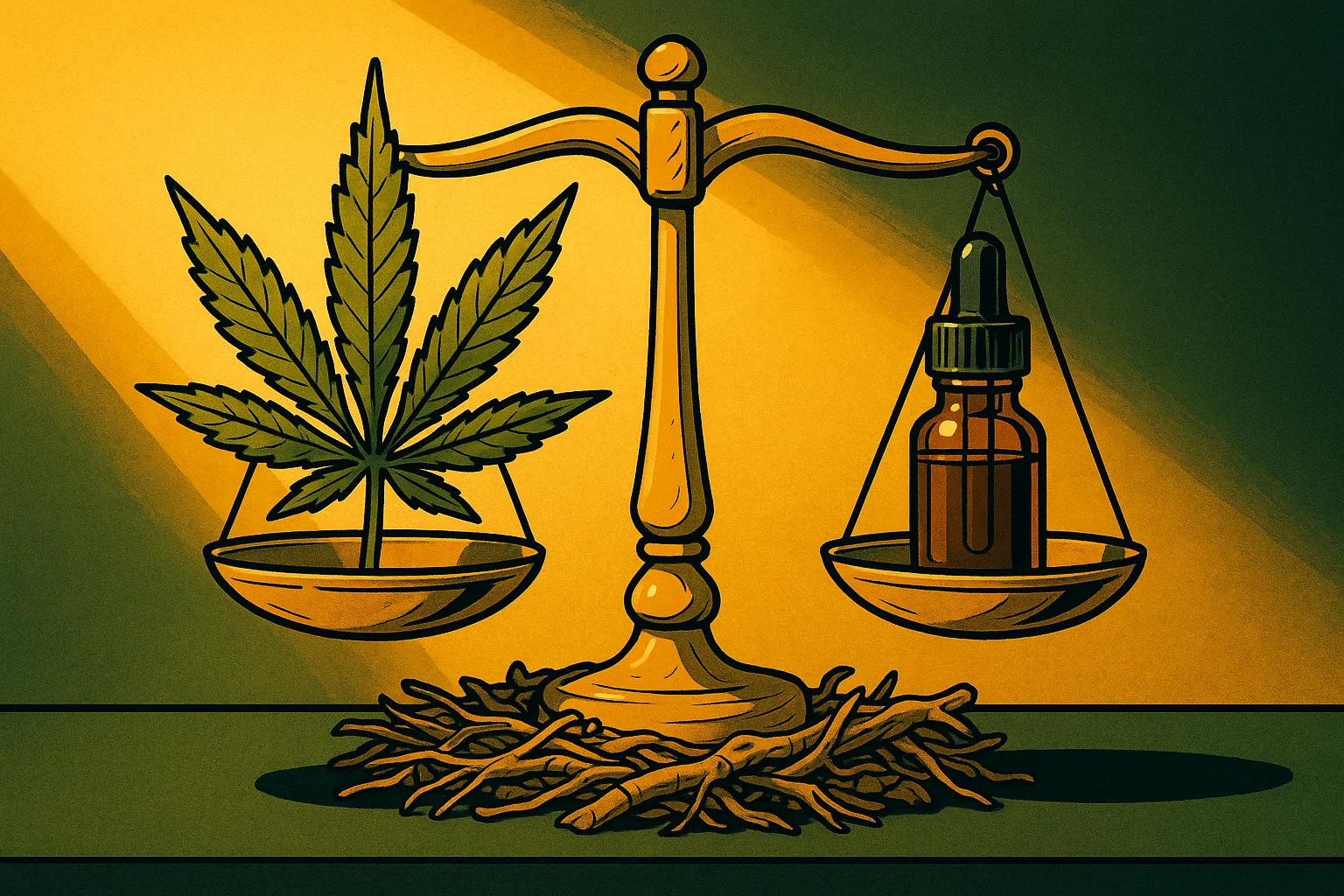
Is cannabis oil legal in India? 2026 AYUSH compliance update
Yes, cannabis oil is legal in India when it is AYUSH-licensed, prescribed by a registered Ayurvedic physician, and purchased from an authorized seller. All three conditions must be met together. Buying without a prescription or from an unlicensed source falls outside the law, regardless of the product's ingredients.
What the law actually says about cannabis oil in India
If you have searched 'is cannabis oil legal in India' and walked away more confused than when you started, you are not alone. The answer is yes, but it comes with three clear conditions that most articles skip over. Indian law does not ban cannabis outright.
It draws careful lines between controlled parts of the plant and those that fall under Ayurvedic medicine. When a product is made by an AYUSH-licensed manufacturer, prescribed by a registered practitioner, and used for a stated wellness purpose, it sits firmly within the law.
This article walks through the NDPS Act 1985, the role of the Ministry of AYUSH, and where Vijaya, the classical Ayurvedic name for cannabis, fits inside that framework. By the end, you will know exactly what to look for before you buy.
Is cannabis oil legal in India? The short answer
Yes, cannabis oil is legally available in India, but only under specific conditions. The answer is not a simple yes or no.
It is a yes with three requirements attached: the product must come from an AYUSH-licensed manufacturer, a registered medical practitioner must prescribe it, and the buyer must use it for the stated Ayurvedic or wellness purpose.
India does not ban cannabis outright. The law draws careful lines around which parts of the plant are controlled, who can process them, and how the resulting product reaches a consumer. AYUSH-licensed Vijaya (the classical Ayurvedic name for cannabis) formulations sit inside those lines.
Unregulated cannabis oil, imported CBD products without Indian clearance, and anything sold without a prescription sit outside them.
This article covers the legal framework in plain language, section by section, so you understand exactly where the lines fall before you consider buying anything.
What the NDPS Act 1985 actually says about cannabis
The Narcotic Drugs and Psychotropic Substances Act, 1985 (India's central law on controlled substances, referred to here as the NDPS Act) defines cannabis in three categories, and the distinctions matter enormously.
The Act controls two parts of the plant as narcotics. The first is cannabis resin, which includes hashish and any concentrated preparation made from the resin. The second is the flowering or fruiting tops of the cannabis plant, which includes any mixture or drink prepared from them.
Producing, possessing, selling, or consuming either of these without proper authorisation is a serious criminal offence under the Act.
The Act explicitly excludes two parts of the plant from this definition. Cannabis leaves and seeds, along with any drink made from leaves, fall outside the narcotic definition. This exclusion is the legal foundation on which Ayurvedic cannabis preparations have historically operated in India.
Section 10 of the NDPS Act gives state governments the authority to permit and regulate the use of cannabis leaves and seeds for Ayurvedic and other purposes. This is why state-level rules matter, and why the legal picture can look slightly different depending on where in India you are.
The key takeaway is that the NDPS Act is not a blanket prohibition. It targets specific parts of the plant and specific uses. Lawfully manufactured Ayurvedic formulations made under AYUSH licensing work within the space the Act creates, not around it.
Where Vijaya fits in Ayurvedic law
Vijaya is the name given to cannabis in classical Ayurvedic texts. The Sushruta Samhita and other foundational texts reference it as a plant with properties relevant to wellness. It has been part of the Ayurvedic pharmacopoeia for centuries.
The Ministry of AYUSH (Ayurveda, Yoga and Naturopathy, Unani, Siddha, and Homeopathy, the Indian government ministry that regulates traditional medicine systems) formally recognises Vijaya as an Ayurvedic ingredient. It appears in the Ayurvedic Pharmacopoeia of India, the official reference that defines which substances licensed Ayurvedic manufacturers may use.
This recognition places AYUSH-licensed Vijaya formulations in a distinct legal category. They are not pharmaceutical drugs regulated under Schedule H of the Drugs and Cosmetics Act. They are not recreational cannabis, which has no legal status in India.
They are Ayurvedic medicines manufactured under a licence granted by the relevant state licensing authority under the Drugs and Cosmetics Act, 1940, and the rules made under it.
That distinction matters for the buyer. When you purchase an AYUSH-licensed Vijaya oil from a licensed manufacturer with a valid prescription, you are operating inside a recognised legal framework, not in a grey area.
The product has been manufactured to defined standards, the Ministry of AYUSH has approved the ingredient, and a practitioner's clinical judgment supports the transaction.
The three conditions that make a cannabis oil purchase legal
Buying Vijaya oil legally in India is not complicated, but every one of the following three conditions must be met. Missing any one of them moves the purchase outside the law.
- The product must come from an AYUSH-licensed manufacturer. The manufacturer must hold a valid licence issued under the Drugs and Cosmetics Act for Ayurvedic medicines. This licence confirms that the product was made in a facility that meets defined quality and safety standards, that the formulation has been approved, and that ingredient sourcing follows the rules. Buying from an unlicensed seller, however professional their website looks, does not satisfy this condition.
- The buyer must have a prescription from a registered practitioner. A registered Ayurvedic physician (a practitioner registered with a state Ayurvedic council under the Indian Medicine Central Council Act, 1970) must assess the buyer's situation and issue a prescription. This is not a formality. The practitioner's assessment is the legal and clinical basis for the purchase. Self-diagnosing and ordering without a prescription is not lawful for these products.
- The product must be used for the stated Ayurvedic or wellness purpose. The prescription ties the product to a specific individual and a specific use. Using a prescribed Ayurvedic medicine for a purpose outside the prescription, or sharing it with someone else, steps outside the legal framework.
These three conditions work together. A licensed product without a prescription is not a legal purchase for the consumer. A prescription for a product from an unlicensed seller carries no legal protection. All three must be in place at the same time.
How AYUSH licensing works and why it matters
A state licensing authority issues an AYUSH manufacturing licence under the Drugs and Cosmetics Act, 1940. The licence applies specifically to Ayurvedic, Siddha, and Unani medicines. It is not a general food business licence, a cosmetics registration, or a dietary supplement approval.
Each of these is a different category with different rules, and none of them authorises a manufacturer to produce Vijaya-based medicines.
To obtain and hold an AYUSH manufacturing licence, a company must meet several requirements. It must employ a qualified technical staff member, typically an Ayurvedic pharmacist or a graduate in Ayurvedic medicine, on site.
Its manufacturing facility must meet the Good Manufacturing Practices standards specified in Schedule T of the Drugs and Cosmetics Rules, 1945. Its formulations must appear in an approved reference, such as the Ayurvedic Pharmacopoeia of India or the Ayurvedic Formulary of India.
The state drug authority may inspect the facility at any time.
For the buyer, the licence does three things. First, it confirms the product was made to a defined quality standard. Second, it confirms the manufacturer sourced and processed the ingredient, Vijaya in this case, within the legal framework.
Third, it gives the buyer a legal basis for possession when combined with a valid prescription. Without the licence, none of these protections exist.
When you see that a brand is AYUSH-certified, the practical meaning is that a government authority has reviewed and approved the manufacturing process. That is meaningfully different from a brand simply claiming to use Ayurvedic ingredients.
State-level rules: why the answer can vary by location
India's constitutional structure gives states significant authority over cannabis regulation. The NDPS Act is a central law, but Section 10 of the Act explicitly allows state governments to permit and regulate cannabis leaves and seeds for Ayurvedic and other purposes.
This means the legal picture has a state layer sitting on top of the central framework.
Some states have used this authority to create their own rules around cannabis cultivation, transport, and sale. Uttarakhand, for example, introduced a licensed hemp cultivation policy in 2018. Other states have stricter excise or narcotics rules that may impose additional requirements on the movement of cannabis-derived products within their borders.
In practice, this means a few things for buyers. The central AYUSH licensing framework applies across India, but your state's excise department or narcotics bureau may have additional registration or permit requirements for retailers or practitioners. In some states, the practitioner issuing your prescription may need to register with a state-specific authority.
In others, a licensed pharmacy dispensing the product may need a separate state permit.
The honest answer to "is this legal in my state?" is: the central framework is consistent, but the local layer varies. If you are in a state with stricter cannabis rules, your prescribing physician will know what the local requirements are.
This is one more reason why the consultation with a registered practitioner is not optional. It is the step that ensures your purchase is lawful in your specific location.
Legal status at a glance: cannabis oil types compared
The table below compares four types of cannabis oil commonly discussed in India against four legal criteria. It is a general guide based on the current AYUSH and NDPS framework. It is not legal advice. If you have questions about your specific situation, book a free consultation with a qualified physician.
| Cannabis oil type | NDPS Act status | AYUSH licence required from manufacturer | Prescription required for buyer | Legally available to consumers in India |
|---|---|---|---|---|
| AYUSH-licensed Vijaya oil (made from approved plant parts, licensed manufacturer) | Permissible under AYUSH licensing and state permissions; not a scheduled narcotic when the manufacturer and dispenser follow the correct process | Yes | Yes, from a registered Ayurvedic practitioner | Yes, when all three conditions are met |
| CBD-only oil derived from cannabis leaves (unlicensed, no AYUSH approval) | Cannabis leaves fall outside the NDPS narcotic definition, but manufacturing and selling without a licence is not lawful under the Drugs and Cosmetics Act | Yes, if sold as an Ayurvedic medicine; no clear legal pathway if sold as a food supplement | Depends on how the product is classified; no clear consumer-facing legal route exists without a prescription | Unclear; legal risk exists without proper licensing and prescription |
| Full-spectrum oil containing material from flowering tops or resin | Flowering tops and resin are scheduled narcotics under the NDPS Act; production and possession without central government authorisation is a criminal offence | A standard AYUSH licence does not cover flowering tops or resin; separate central authorisation would be required | Not applicable; no lawful consumer route currently exists | No, not legally available to consumers under current law |
| Recreational or unregulated cannabis oil (no licence, no prescription) | Illegal; possession and sale are criminal offences under the NDPS Act | No licence held | No prescription issued | No |
Common mistakes that make a legal purchase illegal
The legal framework for Vijaya oil is clear, but buyers regularly make errors that move them outside it. These are the most common ones.
- Buying without a prescription. This is the most frequent mistake. Some sellers, particularly online, do not require a prescription at checkout. The absence of a requirement on the seller's side does not make the purchase legal on the buyer's side. If you possess a scheduled Ayurvedic medicine without a valid prescription, you carry the legal risk.
- Purchasing from an unlicensed seller. A professional website, good reviews, and Ayurvedic-sounding language do not confirm that a seller holds an AYUSH manufacturing licence. Ask for the licence number. A legitimate licensed manufacturer will provide it without hesitation. If a seller cannot or will not provide their AYUSH licence details, do not buy from them.
- Importing cannabis oil products not cleared under Indian law. Many CBD and cannabis oil products sold internationally have not received approval for import and sale in India. Importing them for personal use does not create a legal exemption. Indian customs and narcotics authorities have seized such shipments. The fact that a product is legal in its country of origin has no bearing on its status under Indian law.
- Assuming online availability equals legal status. A product appearing on a major e-commerce platform does not mean the platform has verified it as legally compliant. Marketplace platforms rely on sellers to self-certify compliance. Buyers should not assume a platform listing confirms AYUSH licensing or prescription requirements.
- Using another person's prescription. A practitioner issues a prescription to a specific individual following a clinical assessment of that individual. Using a prescription issued to someone else is not lawful, and the product was not assessed as appropriate for you.
Frequently asked questions about Is Cannabis Oil Legal in India? 2026 AYUSH Compliance Update
What does the NDPS Act 1985 say about cannabis oil?
The NDPS Act 1985 prohibits recreational cannabis but permits the use of cannabis leaves and seeds in Ayurvedic preparations. Vijaya (cannabis) oils that fall under this exemption and carry valid AYUSH licensing sit within the law. A registered practitioner's prescription is still required for a legal purchase.
Do I need a doctor's prescription to buy Vijaya oil legally?
Yes, a prescription from a registered Ayurvedic physician is one of the three conditions that make a purchase legal. Without it, even a properly licensed product cannot be bought lawfully. Calmosis offers a free doctor consultation to help you get the right guidance before you order.
What is Vijaya and how is it different from recreational cannabis?
Vijaya is the classical Ayurvedic name for cannabis. In Ayurveda, it has traditionally been used to support calm, rest, and everyday comfort. It is prepared under AYUSH guidelines as a wellness formulation, not as a recreational substance, and is dispensed only through licensed channels with a valid prescription.
Does cannabis oil legality vary from state to state in India?
Yes, state governments retain authority to add rules on top of central law. Some states impose stricter controls on Vijaya-based products. This means a product that is centrally AYUSH-licensed may still face additional requirements in your state. Check local rules or ask during your free doctor consultation.
What does AYUSH licensing mean and why does it matter?
AYUSH licensing means the Ministry of AYUSH has reviewed and approved a product as a legitimate Ayurvedic formulation. It confirms the product meets manufacturing and ingredient standards set under Indian law. Buying an AYUSH-licensed product is the clearest way to know you are purchasing a legally compliant Vijaya oil.
Can I use Vijaya oil to treat a specific health condition?
Calmosis products are traditionally used Ayurvedic formulations, not treatments for diagnosed conditions. If you have a specific health concern, a registered physician is the right person to assess your situation. Book the free doctor consultation and let the physician guide you on whether Vijaya oil is appropriate for you.
What common mistakes can make a legal cannabis oil purchase illegal?
The most common mistakes are buying without a prescription, purchasing from a seller without AYUSH authorization, and ignoring state-level restrictions. Ordering a product that lists no licensed manufacturer is also a risk. Each of these errors can turn an otherwise compliant purchase into one that falls outside Indian law.
Is there a THC percentage limit for cannabis oil under Indian law?
Indian law does not define a fixed THC percentage threshold the way some other countries do. Legality under the NDPS Act and AYUSH rules rests on licensing, the type of plant material used, and a valid prescription - not on a specific THC number. Rely on AYUSH certification as your compliance guide.
How do I start using Vijaya oil legally and safely?
The clearest first step is booking the free Calmosis doctor consultation. A registered Ayurvedic physician will review your situation, issue a prescription if appropriate, and recommend a formulation suited to your needs. From there, purchasing an AYUSH-licensed product through an authorized channel completes the legal route.
The legal route is clear - your next step is a free doctor consultation
You now have a clear picture of how cannabis oil fits into Indian law. The legal route is real, it is accessible, and it starts with one step: a consultation with a qualified physician.
At Calmosis, every customer journey begins there. Our free consultation connects you with a registered Ayurvedic physician who will review your situation, answer your questions, and, if appropriate, provide the prescription you need to purchase an AYUSH-licensed Vijaya formulation lawfully.
You do not need to work out the legal requirements on your own. The physician handles that as part of the consultation.
In Ayurveda, Vijaya has traditionally been used to support calm, rest, and everyday comfort. Our oils are manufactured by an AYUSH-licensed facility, formulated to the standards of the Ayurvedic Pharmacopoeia of India, and dispensed only on the basis of a valid prescription.
That is the framework the law requires, and it is the framework we follow.
The consultation is free, it takes place with a real doctor, and it puts you in the hands of someone qualified to assess whether Vijaya wellness may support your situation. No pressure, no assumptions, just a direct conversation with a practitioner who understands both the tradition and the legal requirements.
When you are ready, book a free consultation and take the first step the right way.
Talk to a doctor, free