What is CBD, and how may it support your daily calm?
over 2 years ago24 min read

What is CBD, and how may it support your daily calm?

VijayaAyurveda
What is CBD, and how may it support your daily calm?

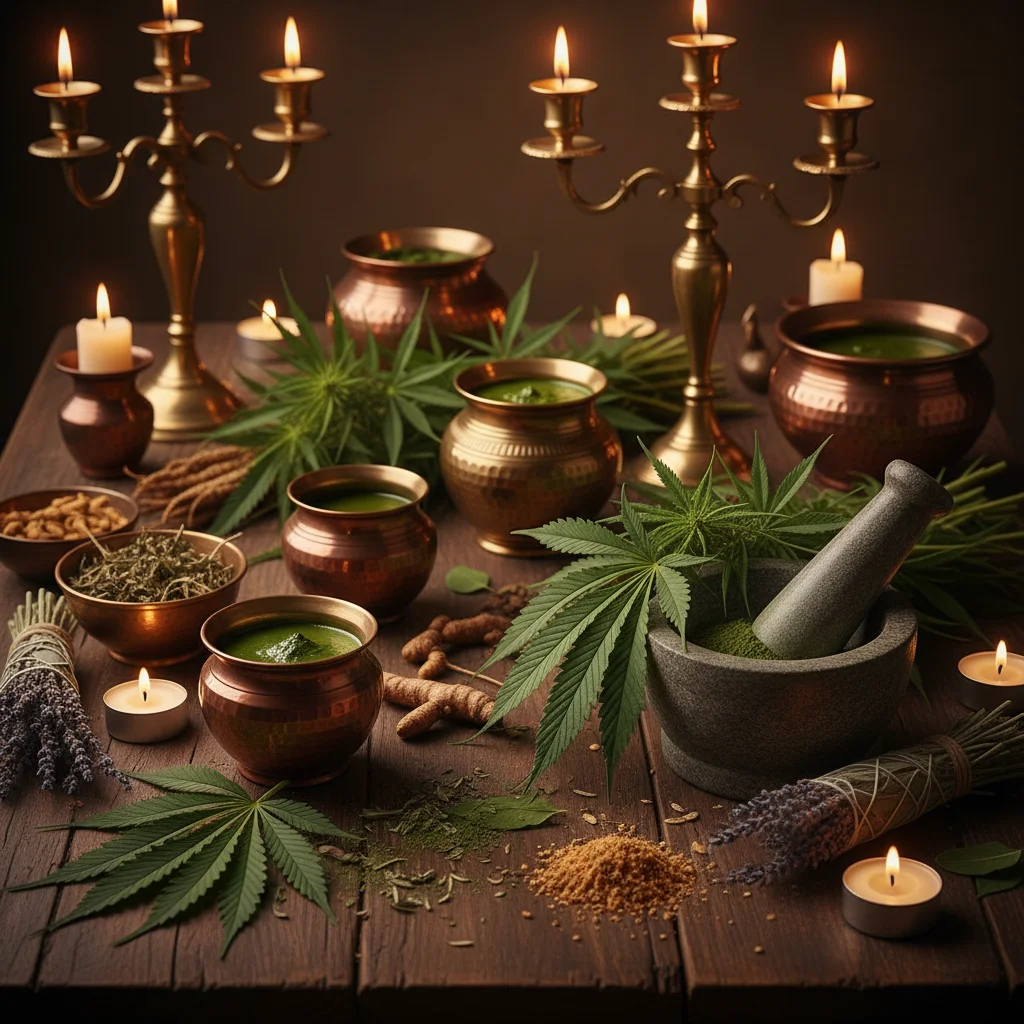
CBD (cannabidiol) is a naturally occurring compound from the cannabis plant. In Ayurveda, it is known through Vijaya and has traditionally been used to support calm and restful sleep. It does not intoxicate, and it may help ease the tension that builds through a busy day.

Article at a glance

What CBD is, where it comes from, and what it may do for you

CBD, short for cannabidiol, is a compound from the cannabis plant that does not cause a high. In India, it has a classical name, Vijaya, and a history in Ayurvedic texts that stretches back well over a thousand years.

Today, urban professionals are returning to that tradition looking for everyday support with stress, sleep, and physical discomfort. This article walks you through what CBD actually is, how your body receives it, and what traditional use and current research suggest it may support. Nothing here is a cure or a guarantee.

Every claim is framed honestly, and anything specific to your health is best discussed with a qualified physician. If you finish reading and want a clear, personal answer about whether CBD may suit you, a free doctor consultation is one step away.

What is CBD, and why are Indians talking about it?

CBD, short for cannabidiol, is a naturally occurring compound found in the cannabis plant. It does not cause a high. That distinction matters, and we will come back to it in detail a little further on.

Interest in CBD has grown steadily across Indian cities over the past few years. Urban professionals dealing with disrupted sleep, persistent low-grade stress, and everyday physical discomfort are looking beyond conventional options.

Many arrive at CBD through social media, word of mouth, or a simple search, and they arrive with reasonable questions: what exactly is this, is it legal, and is it safe?

The honest answer is that CBD is one of dozens of active compounds in cannabis, and it is the one that researchers and traditional practitioners have focused on most closely for calm and comfort support.

Unlike THC (tetrahydrocannabinol, the compound responsible for intoxication), CBD does not alter your state of mind in that way.

In India, cannabis has a long and documented place in Ayurvedic medicine under the classical name Vijaya. For a first-time reader, that framing is important. This is not a foreign wellness trend arriving on Indian shores.

It is a plant that Indian physicians have worked with for centuries, now returning to attention in a more regulated, quality-controlled form.

Calmosis works within the AYUSH framework, which means the Vijaya-based oils and formulations here sit inside the tradition of classical Ayurveda, not pharmaceutical medicine. If you are new to all of this, the best starting point is a conversation with a qualified physician. You can book a free consultation at any point.

Vijaya in Ayurveda: a tradition older than the trend

Cannabis has appeared in Indian classical texts for well over a thousand years. The Atharvaveda, one of the four foundational Vedic texts, references the plant among a group of sacred herbs.

Later, the Sushruta Samhita and the Charaka Samhita, two of the most authoritative classical Ayurvedic texts, describe preparations using cannabis for purposes including pain relief, digestive support, and promoting rest.

The name Vijaya, meaning "one that brings victory," appears in classical Ayurvedic literature to describe the cannabis plant. Ayurvedic physicians classified it according to its rasa (taste), guna (qualities), and prabhava (specific action), placing it within a system of understanding that is precise and context-dependent.

Dosage, preparation method, and the individual's constitution all mattered. This was never a casual or unregulated use.

Regional traditions across India maintained this knowledge through the centuries. In Rajasthan and parts of Uttar Pradesh, cannabis preparations have been part of cultural and ritual life for generations.

The bhang consumed during Holi is perhaps the most widely recognized example, though it represents only one narrow corner of a much broader traditional practice.

In recent years, the Ministry of AYUSH formally recognized Vijaya as a medicinal plant with legitimate Ayurvedic applications. [Note for editor: the specific year requires verification against official AYUSH records before publish.] This recognition acknowledged what classical texts had described for centuries and opened a pathway for regulated, quality-controlled Vijaya-based formulations to reach consumers through licensed Ayurvedic channels.

Calmosis operates within that AYUSH-recognized framework. The products here are Ayurvedic formulations, not pharmaceutical drugs. They carry the context of a tradition that predates the current global conversation about CBD by many centuries.

How CBD works in the body: the basics without the jargon

Your body already has a system designed to receive and respond to compounds like CBD. It is called the endocannabinoid system (a network of receptors, enzymes, and naturally produced compounds that helps regulate mood, sleep, pain perception, and stress response).

Researchers identified it in the early 1990s, and it has since become one of the more studied regulatory systems in human physiology.

The endocannabinoid system runs through the brain, the nervous system, and many organs. It uses two main types of receptors, called CB1 and CB2. CB1 receptors are concentrated in the brain and central nervous system. CB2 receptors appear more widely in immune tissues and peripheral organs.

Your body produces its own compounds, called endocannabinoids, that bind to these receptors. Anandamide is one of the best known. Its name comes from the Sanskrit word ananda, meaning bliss, which gives you a sense of what it does.

CBD does not bind directly to CB1 or CB2 receptors the way THC does. Instead, it appears to influence the system more indirectly, including by slowing the breakdown of anandamide so it stays active in the body for longer.

CBD also interacts with serotonin receptors and certain ion channels involved in how we perceive discomfort. The full picture is still being studied.

What researchers and traditional practitioners agree on is that CBD is not intoxicating and that its effects on the endocannabinoid system are gentler and more modulatory than those of THC.

In plain terms: CBD works with a system your body already has, rather than overriding it. That is one reason it has attracted attention as a candidate for everyday wellness support rather than acute medical intervention.

What CBD may support: calm, sleep, and everyday relief

Three areas come up most consistently in both traditional Ayurvedic use and in current research. They are stress and calm, sleep quality, and everyday physical comfort. Each deserves an honest look.

Calm and stress support

In Ayurveda, Vijaya has traditionally been used to support a settled, calm state of mind. Contemporary research has examined CBD's interaction with serotonin receptors, which play a role in mood regulation. Some studies suggest CBD may help support a calmer response to everyday stressors. The evidence is promising but still developing.

No product can guarantee a specific emotional outcome, and what works well for one person may work differently for another.

Sleep support

Poor sleep is one of the most common concerns among the Indian adults who come to Calmosis. Ayurvedic tradition has long associated Vijaya with promoting rest.

Current research points to CBD's possible influence on the sleep-wake cycle, partly through its interaction with the endocannabinoid system and partly through its potential to reduce the physical and mental restlessness that can delay sleep onset.

Results vary, and a doctor's input is valuable before adding any new supplement to a sleep routine.

Everyday physical comfort

Classical Ayurvedic texts describe Vijaya as useful for supporting relief from everyday physical discomfort, including muscle tension and minor aches. CBD's interaction with CB2 receptors and certain pain-sensing channels has drawn attention in this area. Topical Vijaya-based formulations appear in this tradition specifically for localized comfort support.

A consistent thread through all three areas is the word "may." No Vijaya or CBD product treats, cures, or prevents any disease or condition. If you are managing a diagnosed condition or taking prescribed medication, please book a free consultation with our physician before starting anything new.

CBD versus THC: the difference that matters most

This is the question that sits at the back of almost every first-time reader's mind, and it deserves a direct answer.

THC, tetrahydrocannabinol, is the compound in cannabis that causes intoxication. It binds strongly to CB1 receptors in the brain, producing the altered perception and euphoria associated with recreational cannabis use. This is the effect that most people mean when they talk about getting high.

CBD does not do this. It does not bind to CB1 receptors in the same way, and it does not produce intoxication. You can take a CBD-rich Vijaya oil and go about your day without any impairment to your thinking, coordination, or perception. That is not a marketing claim.

It is a pharmacological distinction that researchers have documented consistently.

Some research suggests CBD may actually moderate some of the less comfortable effects of THC when both are present in the same preparation. Classical Ayurvedic formulations often combined multiple plant compounds with this kind of balancing intention in mind.

AYUSH-certified Vijaya-based products in India are formulated within defined guidelines that govern the ratio and concentration of active compounds. This is one reason the AYUSH certification matters practically, not just symbolically. It signals that a government body has reviewed the formulation against a regulatory standard.

If you have been hesitant about anything cannabis-related because of the association with intoxication, CBD-rich Vijaya oil sits in a different category entirely. The stigma attached to recreational cannabis does not transfer here.

CBD oil formats compared: drops, oils, and topicals

Vijaya-based CBD products come in several formats. Each suits a different kind of use, and the right choice depends on what you are looking to support and how you prefer to take a supplement. The table below gives a plain comparison.

Format How it is used Primary area of support Onset time (approximate) Typical price range (INR)
Sublingual drops Placed under the tongue and held for 60-90 seconds before swallowing Calm, stress support, sleep 15-45 minutes β‚Ή1,200 - β‚Ή3,500 per 30 ml bottle
Vijaya wellness oil (oral) Mixed into a warm drink or taken directly by mouth General daily wellness, calm 30-90 minutes β‚Ή1,000 - β‚Ή3,000 per 30 ml bottle
Topical oil or balm Applied directly to the skin over the area of discomfort and massaged in Localized everyday physical comfort, muscle tension 15-30 minutes locally β‚Ή800 - β‚Ή2,500 per 50 ml
Capsules or soft gels Swallowed with water like any oral supplement Consistent daily support, sleep 45-90 minutes β‚Ή1,500 - β‚Ή4,000 per 30-count pack

Onset times and price ranges are approximate and will vary by brand, concentration, and formulation. A physician should help you identify the format and starting dose that makes most sense for your situation. If you are unsure where to begin, book a free consultation and talk it through with our doctor.

Is CBD legal in India? What AYUSH certification means for you

The legal picture in India is specific and worth understanding clearly.

Cannabis as a recreational substance falls under the Narcotic Drugs and Psychotropic Substances Act, 1985. That act restricts or prohibits recreational use and the production of certain cannabis derivatives.

However, it also contains explicit provisions that allow state governments to permit the cultivation and use of cannabis for Ayurvedic and other traditional medicinal purposes.

Several Indian states, including Uttarakhand and Madhya Pradesh, have issued licenses for the cultivation of cannabis for industrial hemp and Ayurvedic medicinal use.

Uttarakhand was the first state to do so, in 2017. [Note for editor: verify exact year against official state gazette before publish.] This licensing framework is what makes regulated, AYUSH-certified Vijaya-based products legally available to consumers.

AYUSH certification, issued by the Ministry of Ayurveda, Yoga and Naturopathy, Unani, Siddha and Homoeopathy, signals several things at once. It means a government body has reviewed the formulation against classical Ayurvedic texts and current regulatory standards. It means the manufacturer has met quality and safety requirements.

And it means the product is positioned as an Ayurvedic medicine, not a pharmaceutical drug or a recreational product.

For a consumer, AYUSH certification is a practical marker of accountability. It does not replace your own due diligence, and it does not mean a product is right for every individual. But it does mean the product exists within a defined, regulated system rather than an unregulated grey market.

Calmosis holds AYUSH certification. That is not a footnote. It is the foundation on which the brand operates.

What to watch for: side effects and who should be careful

Honesty here matters more than reassurance. CBD and Vijaya-based formulations are generally well tolerated by most adults, but they are not without considerations.

Commonly reported side effects

  • Dry mouth, particularly at higher doses
  • Mild drowsiness, especially when starting out or taking larger amounts
  • Mild changes in appetite
  • Loose stools in some people, usually at higher doses

Most of these effects are dose-dependent, meaning they are more likely at higher amounts and often reduce as the body adjusts. Starting with a low dose and increasing gradually is the standard approach.

Who should be particularly careful

  • People taking prescribed medications, especially blood thinners, anti-seizure drugs, or sedatives. CBD can influence how the liver processes certain drugs, which may affect their concentration in the blood.
  • Pregnant or breastfeeding women. There is not enough evidence to establish safety in these situations, and caution is the appropriate position.
  • People with liver conditions. Some research suggests high doses of CBD may affect liver enzyme levels.
  • Anyone with a diagnosed chronic condition. This is not a reason to avoid Vijaya products entirely, but it is a strong reason to speak with a physician first.

None of the above is meant to alarm. It is meant to inform. Ayurveda has always emphasized that the right preparation, dose, and timing depend on the individual. That principle applies here too.

If any of the above categories apply to you, please do not rely on an article to make your decision. Book a free consultation with our physician, who can review your specific situation and give you a considered recommendation.

Frequently asked questions about Finding Your Natural Calm: How CBD Transforms Daily Stress into Peaceful Moments

Is CBD legal in India?

CBD derived from cannabis is legal in India when it is part of an AYUSH-certified Ayurvedic formulation. Calmosis products carry that certification, which means they meet the regulatory standards set for traditional Ayurvedic wellness preparations sold to adults in India.

What is the difference between CBD and THC?

THC is the compound in cannabis that causes a high. CBD does not produce that effect. Calmosis formulations use Vijaya preparations that stay within AYUSH-certified guidelines, so you get the traditionally valued properties of the plant without the intoxicating experience associated with THC.

What is Vijaya, and how does it relate to CBD?

Vijaya is the classical Ayurvedic name for the cannabis plant. Ayurvedic texts reference it as a plant traditionally used to support calm, rest, and everyday relief. CBD is one of the active compounds within Vijaya, which is why Calmosis frames its products within that ancient tradition.

Can CBD oil help with sleep?

Vijaya has traditionally been used in Ayurveda to support restful sleep. CBD may help ease the mental restlessness that keeps people awake. For concerns about a specific sleep condition, we recommend booking a free doctor consultation so a qualified physician can guide you personally.

What CBD formats does Calmosis offer?

Calmosis offers drops, oils, and topicals. Drops and oils are taken orally and may support calm and sleep from within. Topicals are applied to the skin and may support everyday relief in a specific area. Your free doctor consultation can help you choose the right format.

Are there any side effects of CBD I should know about?

Some people notice mild drowsiness, a dry mouth, or changes in appetite when they first use CBD. These effects are generally mild. If you take prescribed medication or have an existing health condition, speak with a physician first - our free doctor consultation is a good place to start.

Who should be careful about using CBD?

Pregnant or breastfeeding women, people on prescribed medication, and anyone with a diagnosed health condition should consult a doctor before using Vijaya products. Calmosis provides a free consultation with a qualified physician precisely so you can get guidance that fits your personal situation.

How does CBD work in the body?

The human body has an endocannabinoid system - a network of receptors that helps regulate mood, sleep, and physical comfort. CBD interacts with this system gently. Rather than forcing a reaction, it may support the body's own efforts to maintain balance, which is why the effects feel subtle.

How do I start using a Vijaya product from Calmosis?

The best first step is booking a free doctor consultation with Calmosis. A qualified physician reviews your situation and recommends the right product and dose for you. Starting with professional guidance means you use Vijaya safely and in a way that suits your individual needs.

Start your Vijaya routine with a doctor's guidance behind you

The case for Vijaya-based CBD oil rests on a tradition that spans centuries of Ayurvedic practice, a growing body of research into how CBD interacts with the body's own regulatory systems, and the honest experience of adults who have found it a useful part of a calmer daily routine.

Used consistently and at the right dose for you, Vijaya oils may support a quieter response to everyday stress, more settled sleep, and a gentler approach to the minor physical discomforts that accumulate through a working week. None of that is guaranteed. Individual responses vary.

But the tradition is real, the mechanism is documented, and the regulatory framework in India now makes quality-controlled access possible.

The right starting point is not a product page. It is a conversation. Our consulting physician will look at your current health picture, any medications you take, and what you are actually hoping to support.

From there, they should suggest whether a Vijaya formulation makes sense for you, which format suits your lifestyle, and what a sensible starting dose looks like.

That conversation costs nothing. It removes the guesswork from a first step that many people find uncertain. And it means whatever you try, you try it with a qualified doctor's input behind you.

When you are ready, book a free consultation with our physician and find out whether Vijaya oil belongs in your daily routine.

Talk to a doctor, free
Karan Naidu
Karan Naidu
Co-founder, Calmosis

I co-founded Calmosis in Bengaluru in 2023, an AYUSH-certified Ayurvedic wellness brand built around Vijaya, the classical name for cannabis in Ayurveda. I wanted to take a misunderstood plant out of the shadows and make it approachable, pairing traditional Ayurvedic knowledge with honest, plain-spoken guidance and a free doctor consultation, so people can decide what is right for them. I write about sleep, calm, and everyday wellness without hype or false promises, and I point anyone with a specific health question to a qualified physician. .