CBD in Ayurveda: what it means, where it comes from, and how it may support your wellbeing
CBD in Ayurveda refers to the active compounds found in Vijaya, the classical Ayurvedic name for cannabis, used within a traditional wellness framework. Ayurveda does not isolate CBD as a chemical; instead, it works with the whole plant to traditionally support calm, rest, and everyday comfort.
CBD in Ayurveda: ancient plant, modern questions, honest answers
Cannabis has carried many names across Indian history. In Ayurveda, it is known as Vijaya, a plant with roots in the Atharva Veda and a detailed place in classical texts like the Charaka Samhita.
Today, the same plant is discussed in terms of CBD and THC, compounds that modern science has isolated and studied. That gap between ancient tradition and current terminology can feel confusing. This article closes that gap.
It traces Vijaya through classical Ayurvedic literature, explains how traditional physicians understood the plant's properties, and unpacks what CBD and THC actually are.
By the end, you will have a clear, grounded picture of where CBD in Ayurveda begins, what the tradition genuinely says, and how that knowledge may support your everyday wellbeing.
What does CBD in Ayurveda actually mean?
CBD (cannabidiol, a naturally occurring compound found in the cannabis plant) has become a common term in wellness conversations. But for many Indian adults, the connection between CBD and Ayurveda feels unclear. Is this a modern import dressed in ancient clothing, or does the plant genuinely belong to India's classical healing tradition?
The honest answer is that CBD itself is a modern scientific term. Researchers isolated and named it in the twentieth century. The plant it comes from, however, is not new at all. Ayurveda knows this plant as Vijaya, and classical texts document its use across centuries of Indian medicine.
So when we talk about CBD in Ayurveda, we are really talking about one well-studied compound found inside a plant that Ayurvedic physicians have worked with for a very long time. Understanding that distinction matters.
It means Vijaya has a real place in Indian tradition, and it also means that modern science is now helping us understand why certain traditional uses may have worked.
This article walks through the classical references, the Ayurvedic properties attributed to Vijaya, the practical differences between CBD and THC, and what to consider before trying a Vijaya oil. Every specific health question is best answered by a qualified physician, and Calmosis offers a free doctor consultation for exactly that purpose.
Vijaya in the classical texts: a brief history
Vijaya, meaning "the one that brings victory," appears in Indian literature far earlier than most people expect. The Atharva Veda, one of the four Vedas composed in the later Vedic period, lists cannabis among five sacred plants said to offer protection and relief.
This is one of the earliest documented references to the plant anywhere in the world.
The Charaka Samhita, a foundational Ayurvedic text compiled in the early centuries of the common era, references cannabis preparations in the context of digestive support and as an aid for certain states of physical discomfort.
Charaka's approach was always rooted in the concept of balance among the three doshas (Vata, Pitta, and Kapha, the three fundamental bio-energies in Ayurveda), and Vijaya was considered particularly relevant to Vata-related imbalances.
The Sushruta Samhita, another foundational classical text, also mentions cannabis in formulations intended to support the nervous system and ease discomfort during procedures. Sushruta's references are notable because they suggest early Ayurvedic practitioners understood the plant's effect on the nervous system, even without the vocabulary of neuroscience.
Later texts, including the Sharangadhara Samhita composed around the thirteenth or fourteenth century, describe more refined preparations of Vijaya, including oils and pastes, and specify dosage guidance that reflects careful clinical observation over generations.
The point is simple. Vijaya is not a recent addition to Indian wellness. It has a documented, continuous presence in classical Ayurvedic literature spanning more than two thousand years.
How Ayurveda understood what CBD does
Ayurveda does not describe plants in terms of isolated compounds. It describes them in terms of their rasa (taste), virya (potency), vipaka (post-digestive effect), and their action on the doshas. Vijaya is generally described as having a pungent and bitter rasa, a heating virya, and a light, dry quality.
These properties led classical physicians to classify Vijaya as Vata-pacifying in appropriate doses. Vata governs movement, the nervous system, and processes like sleep and anxiety regulation in Ayurvedic thinking. When Vata is elevated, a person may experience restlessness, disturbed sleep, racing thoughts, and physical tension.
Vijaya, used correctly and in the right form, was traditionally considered a nervine tonic, meaning a substance that supports and calms the nervous system.
Modern research on CBD offers a useful parallel. Scientists have found that CBD interacts with the endocannabinoid system (ECS, a network of receptors found throughout the human body that helps regulate mood, sleep, pain perception, and stress response). CBD does not bind directly to the main cannabinoid receptors the way THC does.
Instead, it appears to influence the ECS indirectly, and researchers are studying its possible role in supporting a calm, balanced nervous system.
The alignment is not perfect, because Ayurvedic and modern scientific frameworks use entirely different languages. But the general direction is consistent. Both traditions point toward Vijaya's potential to support the nervous system, ease tension, and promote rest. Neither tradition, ancient or modern, frames this as a guaranteed outcome.
Both frame it as support, used thoughtfully and in the right context.
The research on CBD is still developing. Studies published in peer-reviewed journals have examined CBD's possible role in supporting stress and sleep, but most researchers call for larger trials before drawing firm conclusions. Calmosis reflects that caution in how it describes its products.
CBD, THC, and Vijaya: what is actually in the plant
Cannabis contains more than a hundred different cannabinoids. The two that get the most attention are CBD and THC (tetrahydrocannabinol, the compound responsible for the intoxicating effect commonly associated with cannabis).
THC binds strongly to CB1 receptors in the brain and produces the "high" that makes recreational cannabis controversial. CBD does not produce that effect. It is non-intoxicating, and most researchers consider it well-tolerated at the doses used in wellness products.
Vijaya, as the whole cannabis plant, contains both compounds. The ratio between them varies considerably depending on the variety of the plant and how it is cultivated. Hemp, a variety of cannabis bred for low THC content, typically contains less than 0.3 percent THC and a relatively higher proportion of CBD.
This is the variety that AYUSH-licensed Ayurvedic manufacturers work with in India.
When you look at Vijaya oil products, you may see the terms full-spectrum and isolate. Full-spectrum extract contains CBD alongside other cannabinoids, terpenes, and plant compounds, all present in the original plant. Some researchers suggest these compounds may work better together than in isolation, a concept sometimes called the entourage effect.
An isolate contains only pure CBD, with everything else removed.
For a reader who is cautious about cannabis associations, the key reassurance is this. A CBD-dominant Vijaya extract made from hemp, formulated within the permitted AYUSH framework, does not produce intoxication. The THC content is tightly controlled and falls well below any psychoactive threshold.
What you are getting is a plant-based wellness preparation rooted in a tradition that predates modern pharmacology by centuries.
How Vijaya extract is used in Ayurvedic formulations today
The Ministry of AYUSH permits the use of Vijaya (cannabis) as an ingredient in licensed Ayurvedic formulations. This permission is grounded in the plant's documented presence in classical Ayurvedic texts and is subject to strict quality and licensing requirements.
Manufacturers must hold an AYUSH license, source Vijaya from approved suppliers, and ensure THC content stays within permitted limits.
In practice, Vijaya extract is most commonly delivered in oil form. Ayurvedic oil formulations have a long history in India. The classical preparation method involves infusing active plant material into a carrier oil over a sustained period, allowing the plant's active compounds to transfer into the oil base.
Today's AYUSH-licensed manufacturers follow a similar logic. Common carrier oils include sesame oil, which Ayurveda considers warming and Vata-pacifying, and coconut oil, which is lighter and more easily absorbed.
The choice of carrier matters in Ayurvedic thinking because the carrier itself has its own properties and influences how the formulation acts in the body.
Many formulations also include companion herbs. Ashwagandha (Withania somnifera) is frequently paired with Vijaya for its traditionally recognized support of the nervous system and its adaptogenic qualities. Brahmi (Bacopa monnieri) appears in formulations aimed at mental calm and cognitive support.
Tagar (Valeriana wallichii) is a classical Ayurvedic herb used to support restful sleep and is a natural pairing with Vijaya in sleep-focused oils.
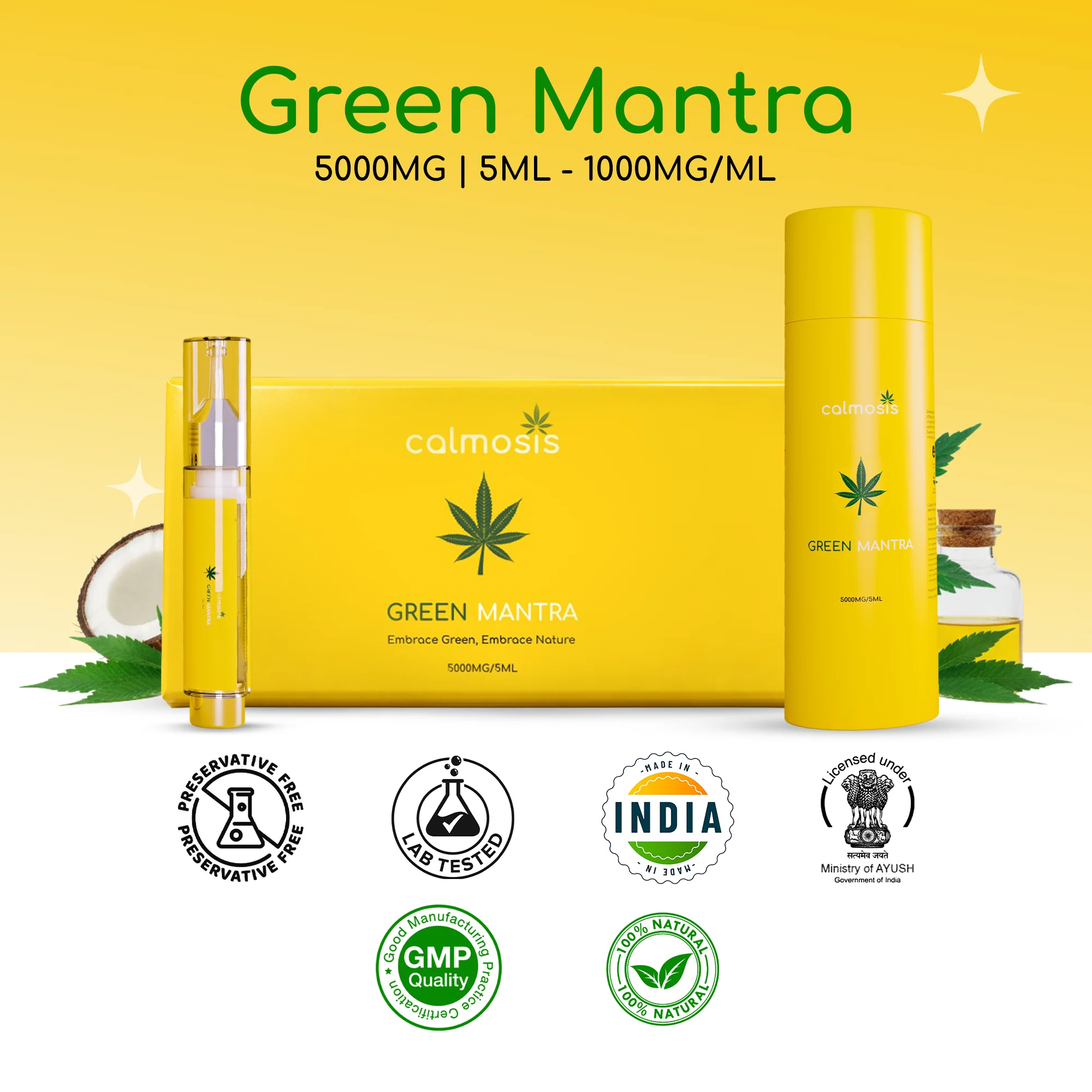
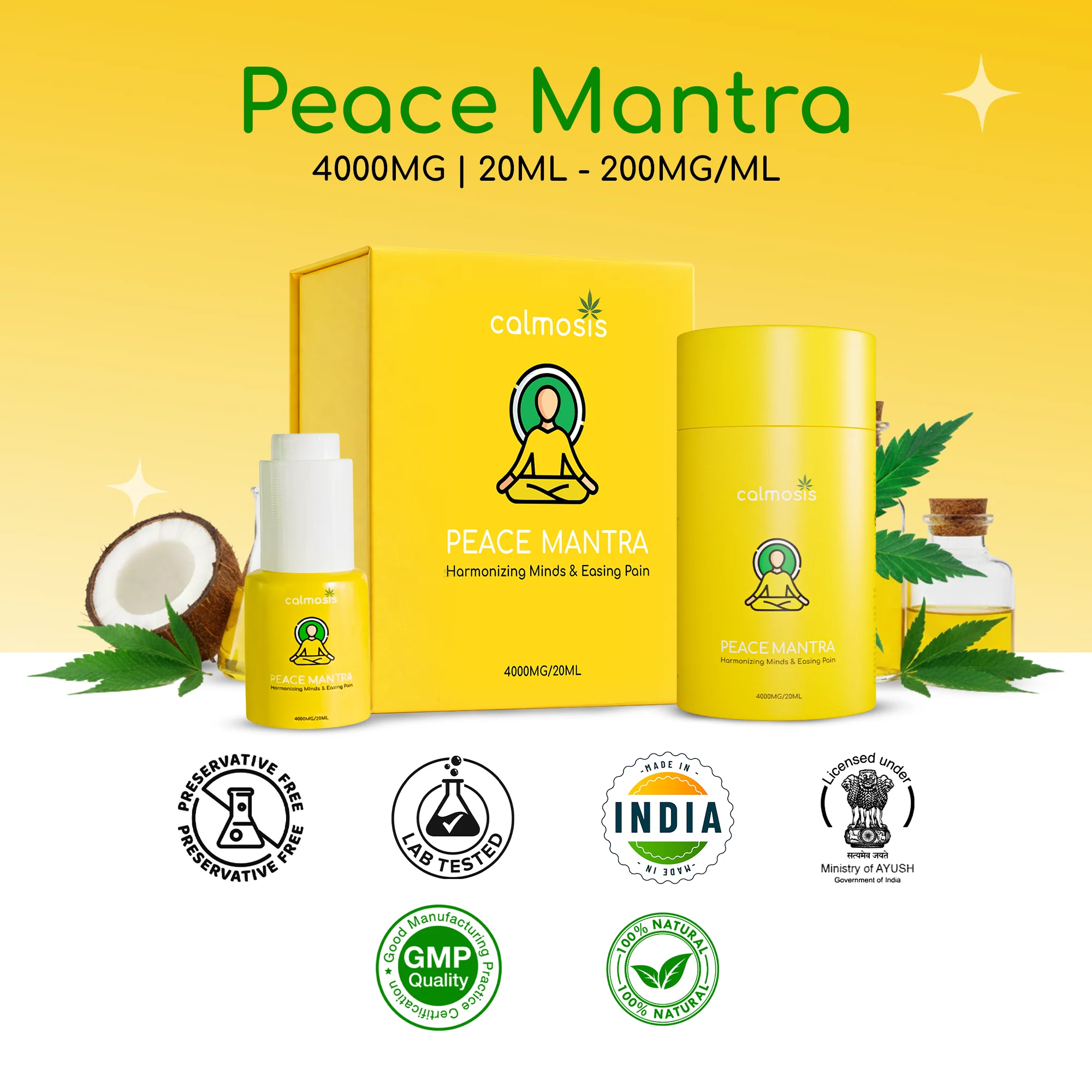
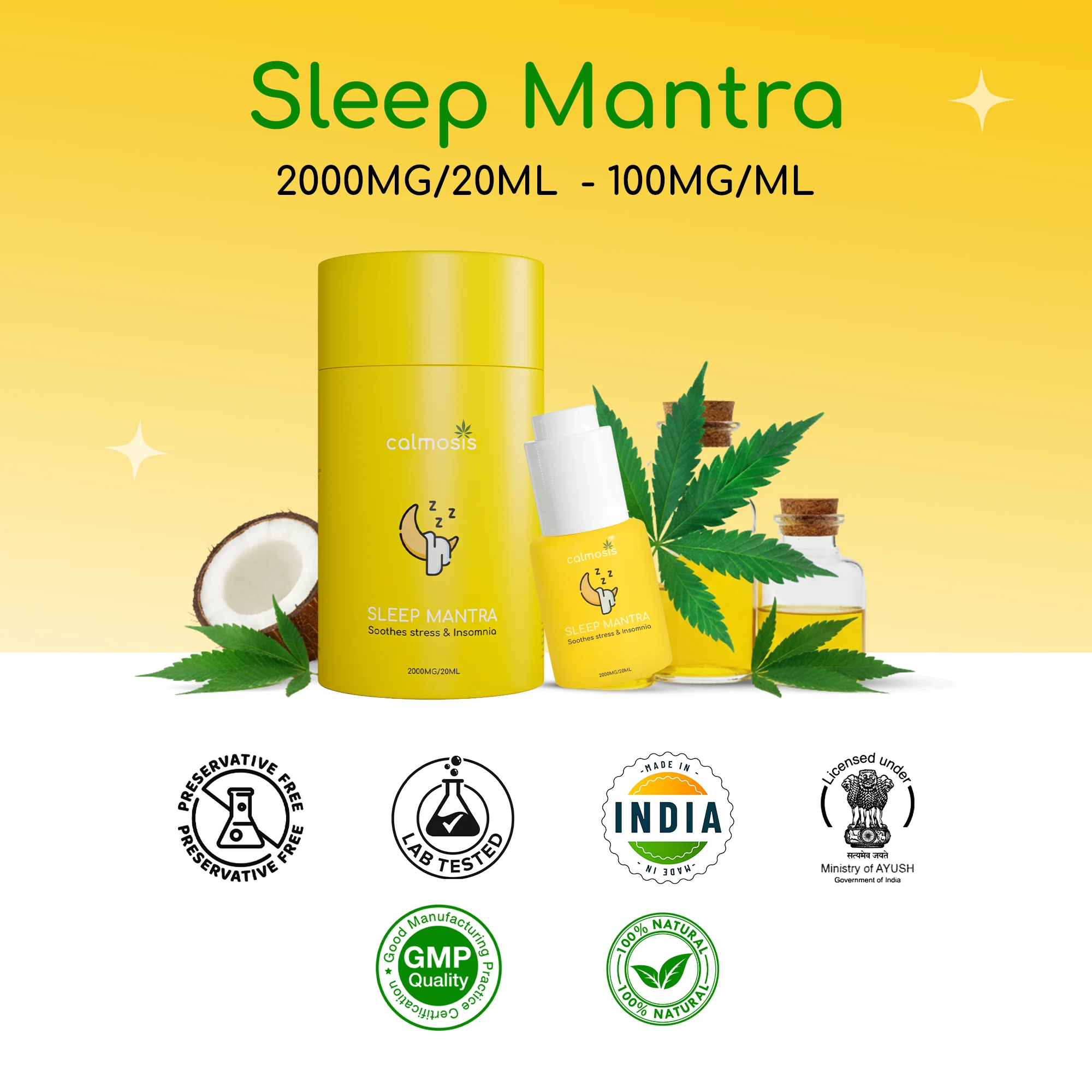
Calmosis formulates its Vijaya oils within this framework, combining AYUSH-certified Vijaya extract with carefully chosen carrier oils and companion herbs. Qualified Ayurvedic physicians contribute to every product's development, and the free doctor consultation ensures that customers receive guidance tailored to their individual constitution before they begin.
Comparing traditional Ayurvedic uses with modern research findings
The table below places classical Ayurvedic indications for Vijaya alongside what current research suggests about CBD. The purpose is not to claim that ancient physicians understood modern biochemistry.
It is to show where the two traditions point in a similar direction, and where the language differs even when the observation may be similar.
All research findings listed here are preliminary or ongoing. They describe what researchers are studying, not confirmed medical outcomes. Specific health concerns should always be discussed with a qualified physician.
| Classical Ayurvedic use of Vijaya | What current CBD research is examining | Alignment notes |
|---|---|---|
| Traditionally used to support calm and ease Vata-related restlessness | Studies are examining CBD's possible role in supporting a balanced stress response via the endocannabinoid system | Both traditions point toward nervous system support; language and mechanism differ |
| Described as a nervine tonic to support restful sleep in Vata imbalance | Researchers are studying CBD's possible influence on sleep duration and sleep quality, including a 2019 study in The Permanente Journal involving 72 adults | Direction of effect aligns; classical texts do not specify dose in the way clinical trials do |
| Used in classical formulations to support comfort and ease physical tension | Preclinical and early clinical research is examining CBD's interaction with pain-signaling pathways; results are preliminary | Both traditions associate Vijaya with physical comfort; modern research has not yet confirmed mechanisms definitively |
| Applied topically in oil preparations for localized support of joints and muscles | Topical CBD formulations are being studied for localized comfort; absorption through skin is an active area of research | The delivery method, oil applied to skin, is consistent across traditions; efficacy data from modern trials is still limited |
| Described as supporting digestive ease in certain Vata and Pitta conditions | Researchers are studying the endocannabinoid system's role in gut motility and digestive comfort; CBD's specific role is not yet well established | Classical observation exists; modern evidence is early-stage and inconclusive |
| Used as part of compound formulations with Ashwagandha and Brahmi for mental steadiness | CBD is being studied alongside other adaptogens in combination wellness research; combined effects are not yet confirmed | Combination use is consistent with classical practice; modern research on combinations is limited |
The table shows a consistent pattern. Where Ayurveda observed an effect over centuries of use, modern researchers are now asking whether and how that effect works at a biological level. The answers are not all in yet.
That is why Calmosis frames its products as traditionally used support, and why a doctor consultation is part of the experience.
What to consider before trying a Vijaya oil
Vijaya oil is not a one-size-fits-all product. Ayurveda has always emphasized that the right preparation, dose, and timing depend on the individual's constitution, current state of health, and the specific imbalance being addressed. That principle is as relevant now as it was when the classical texts were written.
Dosage is the first practical consideration. CBD affects people differently depending on body weight, metabolism, the condition of the endocannabinoid system, and what else a person is taking.
The general guidance across both Ayurvedic and modern clinical thinking is to start with the lowest suggested dose and increase slowly over several days, paying attention to how the body responds.
Interactions with existing medications are a serious consideration. CBD is metabolized in the liver by a group of enzymes called the cytochrome P450 system. Some commonly prescribed medications, including certain blood thinners, anticonvulsants, and antidepressants, use the same metabolic pathway. Taking CBD alongside these medications may alter how the body processes them.
If you take any prescribed medication, you should speak with your physician before starting a Vijaya oil. Calmosis's free doctor consultation is a practical first step for this conversation.
Your Ayurvedic constitution also matters. A person with a predominantly Pitta constitution may respond differently to Vijaya's heating virya than someone who is predominantly Vata. A qualified Ayurvedic physician can assess your prakriti (individual constitution) and advise on whether a Vijaya formulation suits your current state.
Quality and sourcing matter more than price. You should look for products from AYUSH-licensed manufacturers that provide clear information about THC content, extraction method, and third-party testing. A reputable brand will make this information available without you having to ask.
Finally, Vijaya oil is a wellness support, not a substitute for medical treatment. If you have a diagnosed condition or take prescribed medication, your treating physician remains the right person to guide your care. Vijaya oil works alongside good health habits, not instead of them.
Frequently asked questions about CBD in Ayurveda: Unlocking its Full Potential
Is Vijaya the same as CBD or cannabis?
Vijaya is the classical Sanskrit name for the cannabis plant. CBD is one of many compounds found within it. Ayurvedic formulations typically use a whole-plant or broad-spectrum extract rather than isolated CBD, staying closer to how traditional texts described the plant's use.
How has Vijaya traditionally been used in Ayurveda?
Classical Ayurvedic texts describe Vijaya as traditionally used to support sleep, ease everyday discomfort, and calm the mind. These are traditional uses, not guaranteed outcomes. A qualified physician can help you understand whether a Vijaya formulation suits your individual constitution and needs.
What is the difference between CBD and THC in the Vijaya plant?
CBD and THC are two distinct compounds in the cannabis plant. THC produces psychoactive effects; CBD does not. Ayurvedic Vijaya formulations are prepared to traditional standards that manage THC content, and a consulting physician can explain exactly what a specific product contains.
Can a Vijaya oil replace my prescribed medication?
No. A Vijaya oil is a traditionally used Ayurvedic wellness support, not a substitute for prescribed medicine or a doctor's care. If you take existing medication or manage a health condition, please book a free doctor consultation before trying any Vijaya formulation.
What does modern research say about CBD compared to traditional Ayurvedic uses?
Early research explores whether CBD may support relaxation, sleep quality, and comfort, which broadly aligns with traditional Ayurvedic descriptions of Vijaya. Research is still developing, and no clinical outcomes are guaranteed. A consulting physician can help you weigh the evidence for your situation.
Is a Vijaya oil safe for everyone?
Vijaya oils are intended for adults only and are not suitable for everyone. Individual constitution, existing health conditions, and current medications all matter. Calmosis offers a free doctor consultation so a qualified physician can assess whether a Vijaya formulation is appropriate for you.
How is Vijaya extract prepared in Ayurvedic formulations today?
Modern Ayurvedic producers follow AYUSH guidelines to prepare Vijaya extracts using methods rooted in classical processing principles. The extract is typically blended with carrier oils or other herbs. Calmosis formulations are AYUSH-certified, and a consulting physician can walk you through what each product contains.
What should I consider before trying a Vijaya oil for the first time?
Consider your current health, any medications you take, and what you are hoping to support, whether that is sleep, stress, or everyday comfort. Starting with a free doctor consultation at Calmosis means a qualified physician can guide your choice based on your individual constitution.
How do I know which Vijaya formulation suits my Ayurvedic constitution?
Ayurveda tailors recommendations to your individual dosha profile and current imbalances. No single formulation suits every person equally. The best starting point is a free doctor consultation with a Calmosis physician, who can match a Vijaya oil to your specific constitution and wellness goals.
Start with a conversation tailored to your constitution
Vijaya has been part of India's healing tradition for more than two thousand years. Classical Ayurvedic physicians used it to support calm, ease physical tension, and promote restful sleep.
Modern researchers are now studying the same plant through a different lens, and the early findings point in a direction that is consistent with what those physicians observed.
Calmosis Vijaya oils are formulated within the AYUSH-licensed framework, using carefully sourced hemp-derived Vijaya extract combined with traditional carrier oils and companion herbs. They are designed to offer gentle, traditionally rooted support for everyday concerns like stress, restless nights, and physical discomfort.
But the most important step before you try any Vijaya oil is a conversation with a qualified physician. Your constitution is your own. Your health history is your own. The dose and formulation that may support you best depends on both.
Calmosis offers a free consultation with a qualified doctor who understands both Ayurvedic tradition and the current evidence on Vijaya. The consultation is the right place to ask your specific questions, discuss any medications you take, and get guidance matched to your individual needs.
If you are curious about whether Vijaya oil fits your constitution and your life, book a free consultation and start the conversation with someone who can give you a real, personalized answer.
Talk to a doctor, free